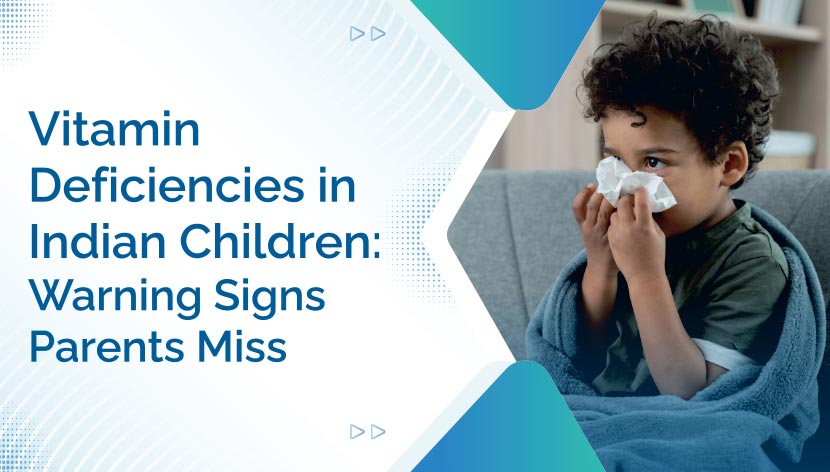


Childhood nutrition lays the foundation for lifelong health, yet vitamin deficiencies remain surprisingly common among Indian children, even in families that consider their diets balanced. Because symptoms often develop gradually and can mimic normal childhood behaviour, many parents miss the early warning signs. Recognising these signs and understanding when to test can help ensure children get the nutrients they need for healthy growth and development.
Why Vitamin Deficiencies Are Common in Indian Children
Common Vitamin Deficiencies in Indian Children
Vitamin D Deficiency
Warning signs parents often miss:
Despite abundant sunlight across most of India, vitamin D deficiency remains widespread due to limited sun exposure and dietary intake.
Vitamin B12 Deficiency
Warning signs parents often miss:
This deficiency is particularly common among children following vegetarian diets, as B12 is primarily found in animal products.
Iron Deficiency
Warning signs parents often miss:
Vitamin A Deficiency
Warning signs parents often miss:
Vitamin C Deficiency
Warning signs parents often miss:
Calcium Deficiency
Warning signs parents often miss:
Why These Signs Are Often Missed
Many of these symptoms — fatigue, irritability, mild aches — are easy to attribute to normal childhood behaviour, growth spurts, or lack of sleep. Children may also struggle to articulate what they’re feeling, making it harder for parents to connect symptoms to a nutritional cause without testing.
Key Tests to Check for Vitamin Deficiencies
1. Vitamin D (25-hydroxyvitamin D)
The standard test to assess vitamin D status.
2. Vitamin B12
Measures circulating B12 levels; in some cases, additional markers like methylmalonic acid may be tested for a clearer picture.
3. Complete Blood Count (CBC) and Iron Studies
Includes hemoglobin, ferritin, and other markers to assess iron status and detect anemia.
4. Calcium and Phosphorus
Assesses mineral levels relevant to bone health.
5. Alkaline Phosphatase
Can indicate bone metabolism issues, particularly relevant when vitamin D or calcium deficiency is suspected.
When Should Parents Consider Testing?
Supporting Healthy Vitamin Levels in Children
Conclusion
Vitamin deficiencies in Indian children are more common than many parents realise, and the warning signs can be easy to overlook amid the busyness of daily life. By staying alert to subtle changes in energy, behaviour, and physical development — and pursuing appropriate testing when needed — parents can help ensure their children get the nutritional support they need for healthy growth and development.
Frequently Asked Questions
Q1. How common is vitamin D deficiency in Indian children? It is quite common, even in sunny regions, due to limited outdoor sun exposure and dietary factors — studies have found high prevalence rates across various age groups.
Q2. Can vitamin deficiencies affect a child’s academic performance? Yes, deficiencies in iron, B12, and vitamin D have all been linked to fatigue and poor concentration, which can impact learning and school performance.
Q3. Should all children be routinely tested for vitamin deficiencies? Not necessarily all children, but those with risk factors, restrictive diets, or persistent symptoms should be evaluated by a pediatrician who can recommend appropriate testing.
Q4. Can vitamin supplements be given without testing first? It’s best to consult a pediatrician before starting supplements, as excessive intake of certain vitamins can also cause health issues, and testing helps determine actual needs.

Food-related reactions are often lumped together under a single umbrella, but food...
17-09-2026

For decades, cholesterol testing has been the cornerstone of cardiovascular risk...
17-09-2026

Chronic fatigue syndrome (chronic fatigue syndrome), also known as myalgic encephalomyelitis...
17-09-2026
Book lab tests, access reports instantly, and get seamless home sample collection with advanced technology.
Trusted by millions, Ampath Labs ensures accurate diagnostics, convenience, and care at your fingertips.



 Select Location



 Get 15% OFF on 1st order above ₹100 Use code:


























































.jpg)