


Blood tests are among the most common medical investigations used to assess overall health, diagnose diseases, monitor ongoing conditions, and evaluate how well treatments are working. Yet, when patients receive their blood test reports, they are often greeted with unfamiliar medical terms, abbreviations, and numbers that can seem overwhelming.
Understanding the basics of your blood test results can help you become a more informed participant in your healthcare journey. While only a qualified healthcare professional can accurately interpret results within the context of your symptoms, medical history, and other investigations, learning what common blood tests measure can provide valuable insights into your health.
Why Blood Tests Are Important
Blood carries oxygen, nutrients, hormones, and immune cells throughout the body. Because blood interacts with virtually every organ and system, analyzing it provides a snapshot of your overall health.
Doctors use blood tests to:
Routine blood testing can often identify health problems before symptoms appear, allowing for earlier intervention and better outcomes.
Understanding the Basics of a Blood Test Report
Before looking at individual values, it helps to understand the structure of a typical blood test report.
Most reports include:
1. Test Name
The specific marker being measured, such as:
2. Your Result
The value measured from your blood sample.
Example:
3. Reference Range
The normal range established from healthy populations.
Example:
4. Flag Indicators
Results may be marked as:
A value slightly outside the normal range does not always indicate disease. Factors such as age, gender, medications, diet, and temporary illnesses can influence results.
Common Blood Tests and What They Mean
Complete Blood Count (CBC)
The Complete Blood Count (CBC) is one of the most frequently ordered blood tests.
It evaluates:
CBC helps diagnose:
Hemoglobin (Hb)
Hemoglobin is a protein in red blood cells that carries oxygen throughout the body.
Normal Range
Men:Approximately 13.5–17.5 g/dL
Women:Approximately 12.0–15.5 g/dL
Low Hemoglobin May Indicate:
Symptoms of Low Hemoglobin
High Hemoglobin May Be Seen In:
Red Blood Cell Count (RBC)
RBC count measures the number of red blood cells in the bloodstream.
Low RBC Count
May indicate:
High RBC Count
May occur with:
White Blood Cell Count (WBC)
White blood cells are responsible for fighting infections.
Normal Range
Typically between 4,000–11,000 cells per microliter.
High WBC Count
May suggest:
Low WBC Count
May indicate:
Platelet Count
Platelets help blood clot and prevent excessive bleeding.
Low Platelet Count
May lead to:
Possible causes include:
High Platelet Count
May occur due to:
Understanding Blood Sugar Tests
Blood glucose tests evaluate how your body regulates sugar.
These tests are commonly used to diagnose and monitor diabetes.
Fasting Blood Sugar (FBS)
Measures blood sugar after fasting for at least 8 hours.
Normal
Below 100 mg/dL
Prediabetes
100–125 mg/dL
Diabetes
126 mg/dL or higher on repeated testing
HbA1c Test
HbA1c reflects average blood sugar levels over the past 2–3 months.
Normal
Below 5.7%
Prediabetes
5.7%–6.4%
Diabetes
6.5% or higher
HbA1c is particularly useful because it provides a longer-term picture than a single glucose reading.
Understanding Lipid Profile Results
A lipid profile measures cholesterol and triglycerides.
High cholesterol can increase the risk of heart disease and stroke.
Total Cholesterol
Desirable
Below 200 mg/dL
Higher levels may indicate increased cardiovascular risk.
LDL Cholesterol (Bad Cholesterol)
LDL can build up in arteries and contribute to plaque formation.
Optimal
Below 100 mg/dL
High LDL increases the risk of:
HDL Cholesterol (Good Cholesterol)
HDL helps remove excess cholesterol from the bloodstream.
Ideal Levels
Higher HDL is generally protective for heart health.
Triglycerides
Triglycerides are a type of fat found in the blood.
Normal
Below 150 mg/dL
High levels may result from:
Liver Function Tests (LFTs)
The liver performs hundreds of essential functions, including detoxification and metabolism.
Liver function tests evaluate liver health.
ALT (Alanine Aminotransferase)
ALT is an enzyme found primarily in the liver.
High ALT Levels
May indicate:
AST (Aspartate Aminotransferase)
AST is found in the liver, heart, muscles, and other tissues.
Elevated AST may suggest:
Bilirubin
Bilirubin is produced when red blood cells break down.
High Bilirubin Levels
May cause jaundice and indicate:
Kidney Function Tests
Kidneys remove waste products and maintain fluid balance.
Blood tests help assess kidney performance.
Creatinine
Creatinine is a waste product generated by muscles.
Elevated Creatinine
May indicate:
Blood Urea Nitrogen (BUN)
BUN measures waste products filtered by the kidneys.
High levels may occur with:
Estimated Glomerular Filtration Rate (eGFR)
eGFR estimates how effectively the kidneys filter blood.
General Interpretation
Above 90:Normal
60–89:Mild reduction
Below 60:Possible chronic kidney disease
Persistent low eGFR requires medical evaluation.
Thyroid Function Tests
The thyroid gland regulates metabolism, energy levels, and body temperature.
TSH (Thyroid Stimulating Hormone)
TSH is often the primary screening test for thyroid disorders.
High TSH
May suggest hypothyroidism (underactive thyroid).
Symptoms include:
Low TSH
May suggest hyperthyroidism (overactive thyroid).
Symptoms include:
Free T4 and Free T3
These hormones help confirm thyroid function.
Abnormal levels, together with TSH, help diagnose specific thyroid conditions.
Iron Studies
Iron tests help determine whether you have iron deficiency or iron overload.
Serum Iron
Measures circulating iron in the bloodstream.
Ferritin
Ferritin reflects stored iron reserves.
Low Ferritin
Often indicates iron deficiency before anemia develops.
High Ferritin
May occur due to:
Vitamin Tests
Nutritional deficiencies are common and can affect overall health.
Vitamin B12
Vitamin B12 supports nerve function and red blood cell production.
Low levels may cause:
Vitamin D
Vitamin D supports bone health and immune function.
Low levels are associated with:
Why Normal Ranges Can Vary
Reference ranges differ between laboratories because of:
Additionally, a result slightly outside the normal range may not necessarily indicate disease.
Doctors interpret results alongside:
Trend analysis is often more important than a single isolated value.
When Should You Be Concerned About Abnormal Results?
You should discuss your results with a healthcare provider if:
Avoid self-diagnosing based solely on internet searches. Many conditions share similar laboratory abnormalities, and only a healthcare professional can provide an accurate diagnosis.
Tips for Understanding Your Blood Test Report
Keep Previous Reports
Comparing results over time can reveal important trends.
Understand the Test Purpose
Know why the test was ordered and what condition it is evaluating.
Ask Questions
If any result is unclear, ask your doctor:
Focus on the Overall Picture
One abnormal number rarely tells the whole story. Health assessments require considering all findings together.
Conclusion
Reading blood test results may seem intimidating at first, but understanding common markers can help you take a more active role in your healthcare. Key tests such as CBC, blood sugar, cholesterol, liver function, kidney function, thyroid hormones, and vitamin levels provide valuable information about how your body is functioning.
Remember that laboratory values are only one piece of the diagnostic puzzle. Results must always be interpreted alongside your symptoms, medical history, physical examination, and other investigations. If you receive abnormal results, consult your healthcare provider for a thorough explanation and personalized guidance. By learning the basics of blood test interpretation, you can better understand your health and make informed decisions about your well-being.

Working professionals often juggle demanding careers, family responsibilities, long commutes,...
04-06-2026

Blood tests are among the most common and effective tools used to assess overall health,...
04-06-2026

A strong immune system is essential for protecting the body against infections, viruses,...
04-06-2026
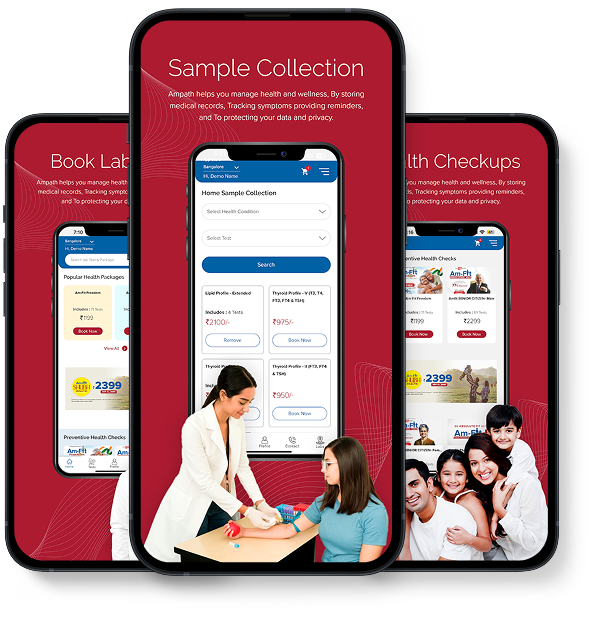
Book lab tests, access reports instantly, and get seamless home sample collection with advanced technology.
Trusted by millions, Ampath Labs ensures accurate diagnostics, convenience, and care at your fingertips.



 Select Location



 Get 15% OFF on 1st order above ₹100 Use code:



































































.jpg)