
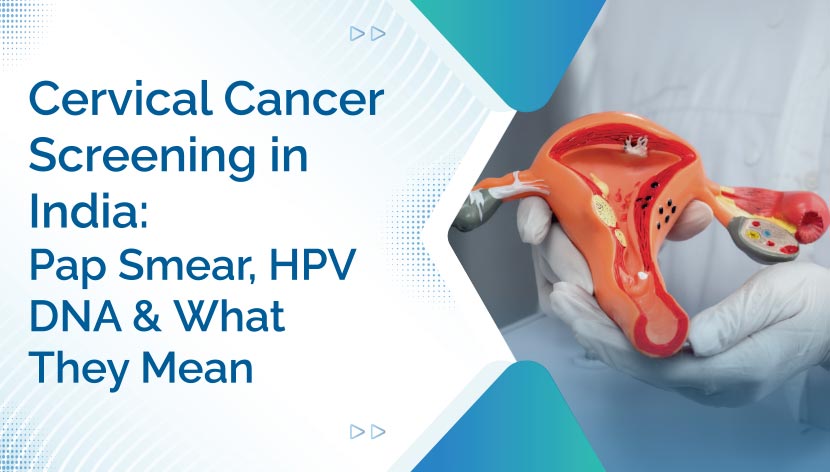


Cervical cancer remains one of the most common cancers affecting Indian women, yet it is also one of the most preventable through timely screening. Understanding the difference between a Pap smear and an HPV DNA test — and what your results mean — can empower you to take charge of your reproductive health.
Why Cervical Cancer Screening Matters in India
India accounts for a significant share of the global cervical cancer burden. Much of this is attributed to low screening rates, limited awareness, and delayed diagnosis. Since cervical cancer develops slowly, often over 10 to 15 years, regular screening can detect precancerous changes long before they progress to cancer.
What Causes Cervical Cancer?
Most cervical cancer cases are linked to persistent infection with high-risk strains of the Human Papillomavirus (HPV), a common sexually transmitted infection. Not all HPV infections lead to cancer — most clearly on their own — but persistent infection with certain high-risk strains can cause cellular changes that progress to cancer over time.
Understanding the Pap Smear Test
A Pap smear (Papanicolaou test) involves collecting cells from the cervix to examine under a microscope for abnormal changes.
What it detects:
Recommended frequency:
Understanding the HPV DNA Test
The HPV DNA test detects the genetic material of high-risk HPV strains directly, rather than looking at cellular changes.
What it detects:
Recommended frequency:
Pap Smear vs HPV DNA Test: Key Differences
| Aspect | Pap Smear | HPV DNA Test |
|---|---|---|
| What it detects | Abnormal cervical cells | High-risk HPV virus presence |
| Best for | Ages 21–65 | Ages 30 and above (primary or co-test) |
| Sensitivity | Moderate | Higher sensitivity for high-risk HPV |
| Frequency | Every 3 years | Every 5 years (co-testing) |
Many gynecologists recommend co-testing (both tests together) for women over 30, as this combination offers the most comprehensive screening.
What Your Results Mean
Normal Pap smear: No abnormal cells detected; continue routine screening as recommended.
Abnormal Pap smear (ASC-US, LSIL, HSIL): Indicates cellular changes ranging from mild to more significant abnormalities. Further testing, such as colposcopy, may be recommended.
Negative HPV DNA test: No high-risk HPV detected; low risk of developing cervical cancer in the near term.
Positive HPV DNA test: High-risk HPV strain detected. This doesn’t mean cancer is present, but closer monitoring or further testing (like a Pap smear or colposcopy) is usually recommended.
Who Should Get Screened?
Preventing Cervical Cancer Beyond Screening
Conclusion
Cervical cancer screening through Pap smears and HPV DNA testing offers a powerful opportunity for early detection and prevention. Despite being highly preventable, cervical cancer continues to affect thousands of Indian women each year, often due to low screening uptake. Making regular screening a part of your healthcare routine, alongside HPV vaccination where appropriate, can significantly reduce your risk and support long-term reproductive health.
Frequently Asked Questions
Q1. Is the Pap smear painful? Most women experience mild discomfort rather than pain during the brief procedure, which takes only a few minutes.
Q2. Can I get cervical cancer if I’ve been vaccinated against HPV? The HPV vaccine significantly reduces risk but doesn’t cover all high-risk strains, so regular screening is still recommended even after vaccination.
Q3. What should I do if my HPV test is positive, but my Pap smear is normal? Your doctor may recommend repeat testing after a year or additional tests like colposcopy, depending on the specific HPV strain detected.
Q4. At what age can I stop cervical cancer screening? Most guidelines suggest screening can stop around age 65 if previous results have been consistently normal, but this should be a decision made with your doctor.

Food-related reactions are often lumped together under a single umbrella, but food...
17-09-2026

For decades, cholesterol testing has been the cornerstone of cardiovascular risk...
17-09-2026
Chronic fatigue syndrome (chronic fatigue syndrome), also known as myalgic encephalomyelitis...
17-09-2026
Book lab tests, access reports instantly, and get seamless home sample collection with advanced technology.
Trusted by millions, Ampath Labs ensures accurate diagnostics, convenience, and care at your fingertips.




 Select Location



 Get 15% OFF on 1st order above ₹100 Use code:



































































.jpg)