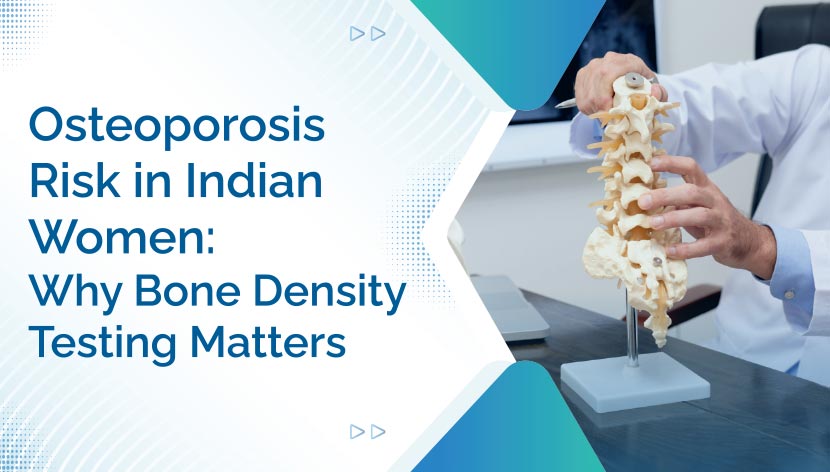


Osteoporosis, a condition characterized by weakened and brittle bones, is often called a “silent disease” because it progresses without symptoms until a fracture occurs. Indian women face a particularly high risk of osteoporosis due to a combination of genetic, dietary, and lifestyle factors, making bone density testing an important yet often overlooked part of preventive healthcare.
Why Are Indian Women at Higher Risk?
Understanding Osteoporosis
Bone is living tissue that is constantly being broken down and rebuilt. Osteoporosis occurs when bone breakdown outpaces bone formation, leading to porous, fragile bones that are more susceptible to fractures — particularly in the hip, spine, and wrist.
Risk Factors Beyond Gender
Why Bone Density Testing Matters
Because osteoporosis typically has no symptoms until a fracture occurs, waiting for warning signs means waiting too long. Bone density testing allows for:
The DEXA Scan: The Gold Standard Test
Dual-Energy X-ray Absorptiometry (DEXA) is the most widely used and accurate test for measuring bone mineral density. It is a quick, painless, low-radiation scan typically performed on the hip and spine.
DEXA scan results are reported as:
– T-score of -1.0 or above: Normal bone density
– T-score between -1.0 and -2.5: Osteopenia (low bone mass, precursor to osteoporosis)
– T-score of -2.5 or below: Osteoporosis
Other Relevant Tests
Serum Calcium and Phosphorus
Helps assess overall mineral balance related to bone health.
Vitamin D (25-hydroxyvitamin D)
Given the widespread deficiency among Indian women, this is a critical test to check alongside bone density.
Parathyroid Hormone (PTH)
Helps evaluate calcium regulation, particularly if calcium levels are abnormal.
Alkaline Phosphatase and Bone Turnover Markers
These can provide additional information about the rate of bone remodeling.
Who Should Get a Bone Density Test?
Preventing and Managing Osteoporosis
Conclusion
Osteoporosis is often underdiagnosed until a fracture forces attention to bone health. Given the unique risk factors faced by Indian women — from vitamin D deficiency to smaller bone frames — proactive bone density testing is a crucial part of preventive care after age 50, or earlier if risk factors are present. Don’t wait for a fracture to find out your bone health status; a simple DEXA scan can provide the clarity needed to protect your bones for years to come.
Frequently Asked Questions
Q1. At what age should Indian women get their first bone density test? Most guidelines recommend screening starting at age 50 or at menopause, though earlier testing may be advised for those with risk factors.
Q2. Is a DEXA scan painful or does it involve high radiation? No, it is a quick, painless procedure that involves a very low dose of radiation, much lower than a standard X-ray.
Q3. Can osteoporosis be reversed? While bone density that has already been lost is difficult to fully restore, treatment and lifestyle changes can significantly slow further bone loss and, in some cases, modestly improve bone density.
Q4. Do men need bone density testing too? Yes, though the risk is generally lower and testing is typically recommended at a later age unless specific risk factors are present.

Food-related reactions are often lumped together under a single umbrella, but food...
17-09-2026
For decades, cholesterol testing has been the cornerstone of cardiovascular risk...
17-09-2026
Chronic fatigue syndrome (chronic fatigue syndrome), also known as myalgic encephalomyelitis...
17-09-2026
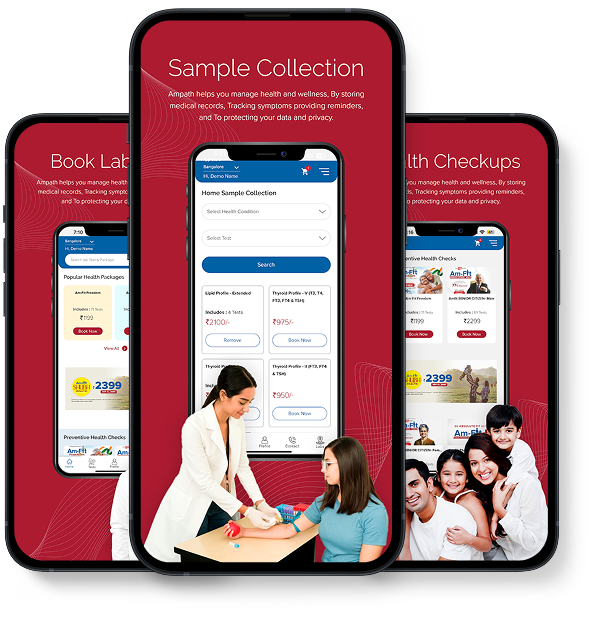
Book lab tests, access reports instantly, and get seamless home sample collection with advanced technology.
Trusted by millions, Ampath Labs ensures accurate diagnostics, convenience, and care at your fingertips.



 Select Location



 Get 15% OFF on 1st order above ₹100 Use code:




























































.jpg)