
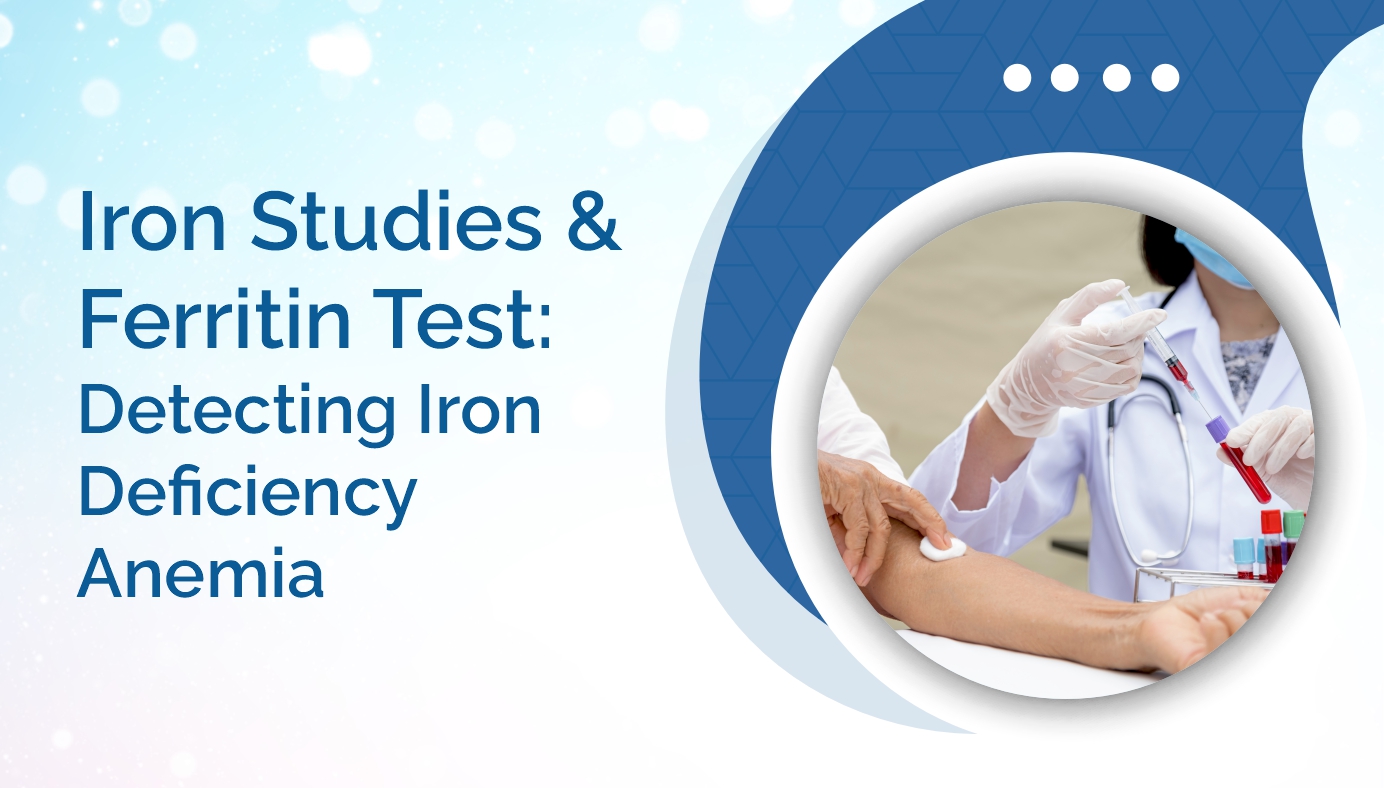


Iron is an essential mineral that plays a vital role in keeping the body healthy. It is a key component of hemoglobin, the protein in red blood cells that transports oxygen from the lungs to the rest of the body. When iron levels are insufficient, conditions such as iron deficiency anemia can develop, leading to fatigue, weakness, and reduced physical performance.
An iron studies blood test, which includes a ferritin test, is an important diagnostic tool used to assess different forms of iron in the body. This group of tests helps doctors evaluate iron stores and determine whether iron deficiency or iron overload is present.
What Are Iron Studies?
Iron studies refer to a set of blood tests performed together to provide a complete picture of iron metabolism. These tests are commonly used to diagnose and monitor conditions related to abnormal iron levels.
Serum Iron
Serum iron measures the amount of iron circulating in the bloodstream that is bound to transferrin, the protein responsible for transporting iron. Serum iron levels can fluctuate throughout the day and may be influenced by recent dietary intake, which is why this value is interpreted alongside other iron tests.
Total Iron-Binding Capacity (TIBC)
TIBC measures the blood’s ability to bind and transport iron. It indirectly reflects transferrin levels in the body. In iron deficiency, transferrin levels increase but are not fully saturated, resulting in a high TIBC. In contrast, iron overload leads to high transferrin saturation and a lower TIBC.
Transferrin Saturation
Transferrin saturation represents the percentage of transferrin that is bound to iron. It is calculated using serum iron and TIBC values. Low transferrin saturation strongly suggests iron deficiency, while high values indicate excess iron in the body.
Ferritin
The ferritin test measures stored iron in the body. Ferritin is a protein that stores iron in tissues such as the liver, spleen, and bone marrow and releases it when needed. Blood ferritin levels closely reflect total iron stores, making this test one of the most reliable indicators of iron status.
Why Is a Ferritin Test Important?
The ferritin test is particularly important because it can detect early iron deficiency, even before hemoglobin or serum iron levels become abnormal.
When dietary iron intake is inadequate, the body first uses stored iron. As these reserves decline, ferritin levels decrease. A low ferritin level is a clear sign of depleted iron stores and iron deficiency.
Elevated ferritin levels may indicate iron overload conditions such as hemochromatosis. High ferritin can also be seen in inflammation, liver disease, or certain cancers, as ferritin acts as an acute-phase reactant and rises during inflammatory states.
When Are Iron Studies and Ferritin Tests Ordered?
Doctors may recommend iron studies and ferritin testing when symptoms suggest abnormal iron levels.
Symptoms of Iron Deficiency Anemia
Chronic fatigue and weakness
Pale skin
Shortness of breath
Dizziness or lightheadedness
Cold hands and feet
Brittle nails or hair loss
Cravings for non-food substances such as ice or dirt
Symptoms of Iron Overload
Joint pain
Abdominal discomfort
Unexplained fatigue
Reduced libido
Heart-related problems
Iron studies are also used to monitor individuals with chronic conditions such as kidney disease, inflammatory bowel disease, or those receiving treatment for anemia.
Preparing for the Test and Understanding Results
You may be asked to fast for up to 12 hours before an iron studies test, as food intake can affect serum iron levels. Always follow your doctor’s instructions before testing.
Interpreting iron studies requires evaluating all test values together rather than focusing on a single measurement.
Iron Deficiency Anemia: Low serum iron, low ferritin, low transferrin saturation, and high TIBC.
Iron Overload: High serum iron, high ferritin, high transferrin saturation, and normal or low TIBC.
Anemia of Chronic Disease: Low serum iron and low TIBC, with normal or elevated ferritin due to inflammation.
Discussing results with a healthcare provider is essential to determine the underlying cause and appropriate treatment.
Your Partner in Diagnostic Excellence
Understanding iron levels is essential for maintaining overall health. Iron studies and ferritin tests provide valuable insight into iron balance and support early detection of iron deficiency anemia.
Accurate testing and expert interpretation help guide effective treatment and long-term health management. If you experience symptoms of iron imbalance or have been advised to test your iron levels, timely diagnostics can make a meaningful difference.

Food-related reactions are often lumped together under a single umbrella, but food...
17-09-2026

For decades, cholesterol testing has been the cornerstone of cardiovascular risk...
17-09-2026
Chronic fatigue syndrome (chronic fatigue syndrome), also known as myalgic encephalomyelitis...
17-09-2026
Book lab tests, access reports instantly, and get seamless home sample collection with advanced technology.
Trusted by millions, Ampath Labs ensures accurate diagnostics, convenience, and care at your fingertips.




 Select Location



 Get 15% OFF on 1st order above ₹100 Use code:



































































.jpg)