
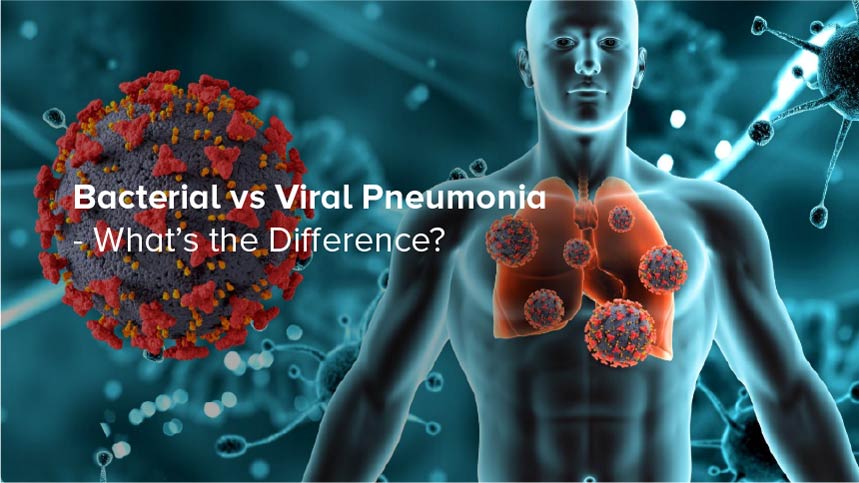


Pneumonia is a serious lung infection that causes inflammation in the air sacs (alveoli), leading to symptoms such as cough, fever, chills, and breathing difficulty. The most common types are bacterial and viral pneumonia. Knowing the difference helps guide proper diagnosis and treatment.
What is Pneumonia?
Pneumonia occurs when the lungs’ air sacs fill with fluid or pus due to infection. It can be caused by bacteria, viruses, or fungi. Young children, older adults, and people with weakened immune systems are at higher risk.
Bacterial Pneumonia
Causes: Bacterial pneumonia is commonly caused by Streptococcus pneumoniae. Other bacteria include Haemophilus influenzae, Mycoplasma pneumoniae, Staphylococcus aureus, and Legionella pneumophila.
Symptoms:
Diagnosis: Physical exam, chest X-ray, blood tests, and sputum culture help confirm bacterial pneumonia.
Treatment: Antibiotics such as amoxicillin, azithromycin, doxycycline, or levofloxacin. Rest, fluids, and fever-reducing medications support recovery.
Viral Pneumonia
Causes: Viruses like influenza, RSV, coronavirus (including COVID-19), adenovirus, and parainfluenza.
Symptoms:
Diagnosis: Chest X-ray, viral PCR tests (flu, COVID-19), and blood tests to rule out bacterial infection.
Treatment: Supportive care (rest, hydration, fever control). Antivirals may be used for influenza or COVID-19. Severe cases may require oxygen therapy.
Key Differences Between Bacterial and Viral Pneumonia
Who Is at Risk?
Complications of Pneumonia
How to Prevent Pneumonia
When to See a Doctor
Conclusion
Bacterial pneumonia requires antibiotics and usually appears suddenly, while viral pneumonia develops gradually and is treated with supportive care. Understanding the difference helps ensure timely treatment and faster recovery. Preventing pneumonia through vaccines, hygiene, and healthy habits remains the best defense.

Food-related reactions are often lumped together under a single umbrella, but food...
17-09-2026

For decades, cholesterol testing has been the cornerstone of cardiovascular risk...
17-09-2026

Chronic fatigue syndrome (chronic fatigue syndrome), also known as myalgic encephalomyelitis...
17-09-2026
Book lab tests, access reports instantly, and get seamless home sample collection with advanced technology.
Trusted by millions, Ampath Labs ensures accurate diagnostics, convenience, and care at your fingertips.




 Select Location



 Get 15% OFF on 1st order above ₹100 Use code:



































































.jpg)